Pulley versus carabiner efficiency.
It’s always a good idea to be prepared for self-rescue when you are out and about climbing, caving, canyoning, or mountaineering. Make sure the gear you have can do the job and you have tried it out.
One question that comes up is: Can I use carabiners (to save weight) instead of pulleys for a rescue raising system?
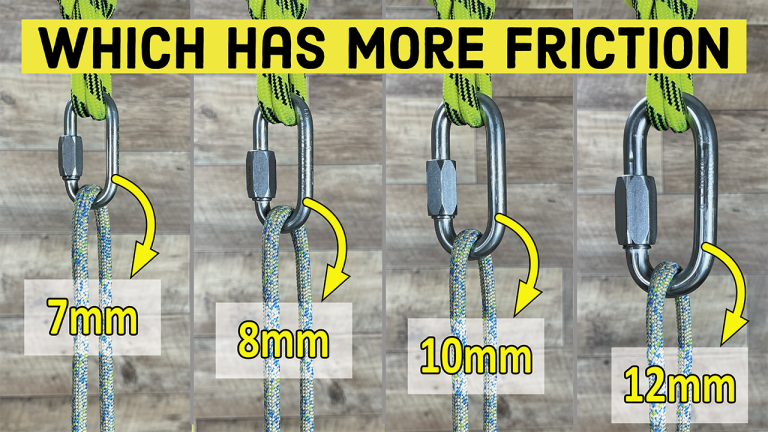
The main issue is friction. I did some quick look testing so you can gain an understanding of pulley versus carabiner efficiency.
1. The gear
- Kordas Static Rope (9mm Dana)
- Petzl mini pulley (sheave diameter of 25mm)
- CT alloy carabiner (10mm stock)
- Rock Exotica Enforcer (load cell accurate to 0.02kN increments)
- Bag with a mass of 10kg (0.1kN)
2. Test procedure
- Connected everything up
- Pulled steadily on the load cell with my hand
- 5 tests on each
- Recorded the max load
3. Carabiner results
- Test 1: 0.2kN
- Test 2: 0.18kN
- Test 3: 0.18kN
- Test 4: 0.18kN
- Test 5: 0.2kN
- Average 0.188
- Efficiency 53%

3. Pulley results
- Test 1: 0.12kN
- Test 2: 0.12kN
- Test 3: 0.12kN
- Test 4: 0.12kN
- Test 5: 0.12kN
- Average 0.12
- Efficiency 83%

Conclusions
- The test results confirmed what I felt. The load was much easier to get moving with the pulley and much harder with the carabiner.
- If you expect short hauls of not much load then a carabiner can work.
- If you expect longer hauls then consider having a pulley on your harness.
- If you are a small person trying to haul a larger person then you need pulleys.
- One concept is that if everyone in your group carries 1 small ball bearing pulley you can combine resources and create a rescue raising system when needed.
- Plan for likely scenarios, try out your system and carry the right gear.
By Grant Prattley, Over The Edge Rescue, 2016