Learn pulley system basics
A pulley system lets you haul a rescue load up vertical or sloping terrain, from a single pulley at the anchor to multi-pulley setups for heavier loads and smaller teams. This post covers pulley system setup, the three system types (simple, compound, complex), mechanical advantage, and progression.
Pulley system setup
Pulley system types
Simple(s)
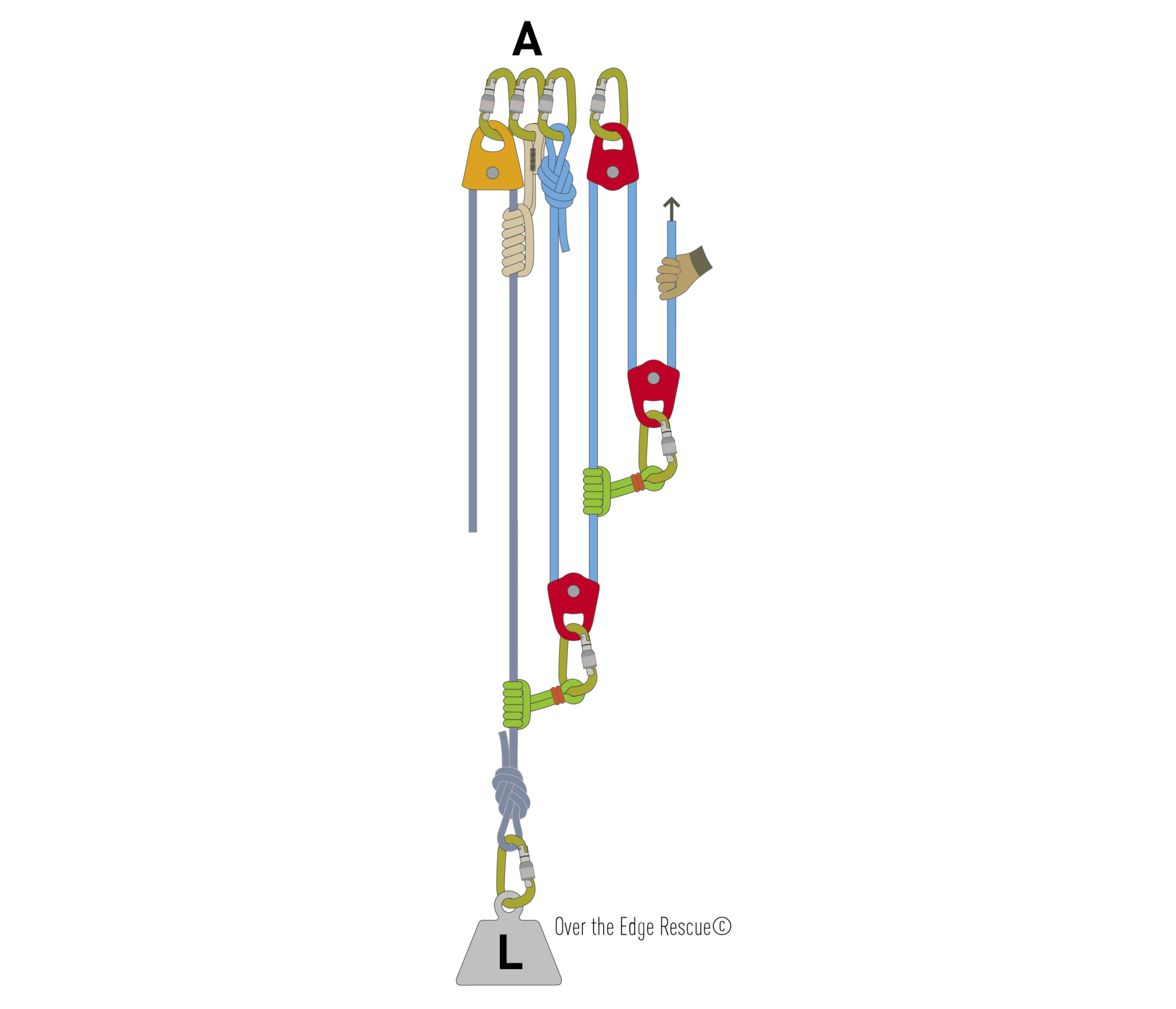
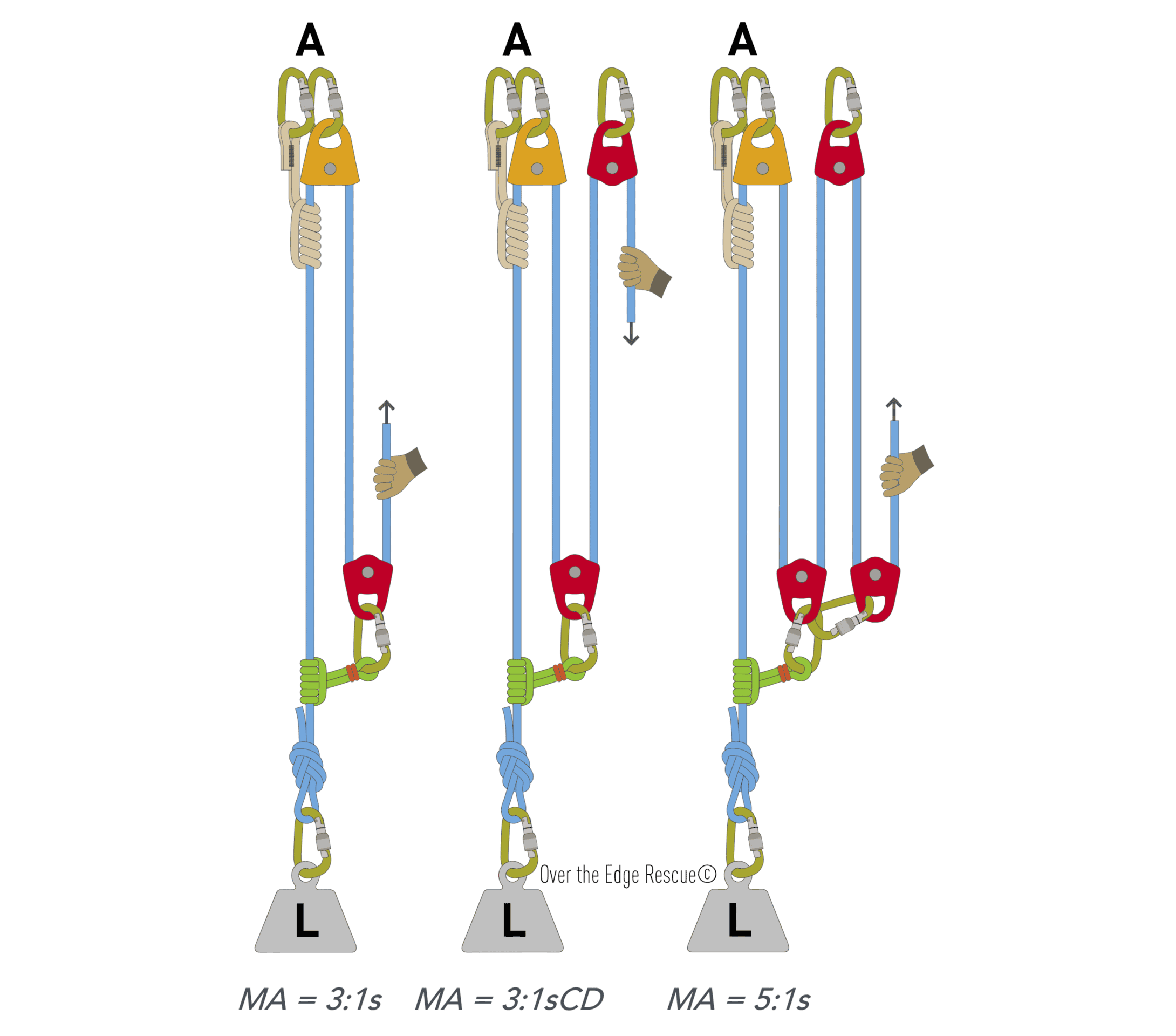
A simple pulley system is defined as ‘one continuous flow of rope, back and forth, alternating between fixed pulleys on the anchor and travelling pulleys the load’.
- A simple pulley system is notated with a lowercase letter (s) after the mechanical advantage of the system. For example, the figure below can be written 5:1s.
- All pulleys on the load are attached at the same point, which could be directly to the load or, more commonly, onto a rope grab.
- A feature of simple pulley systems is that all travelling pulleys move towards the anchor at the same speed, resulting in an even collapse of the system.
- This feature of even collapse is an advantage for many uses where there is limited space or as an addition to a system to achieve a specific task, such as a jigger used to pass a bend.
Compound(c)
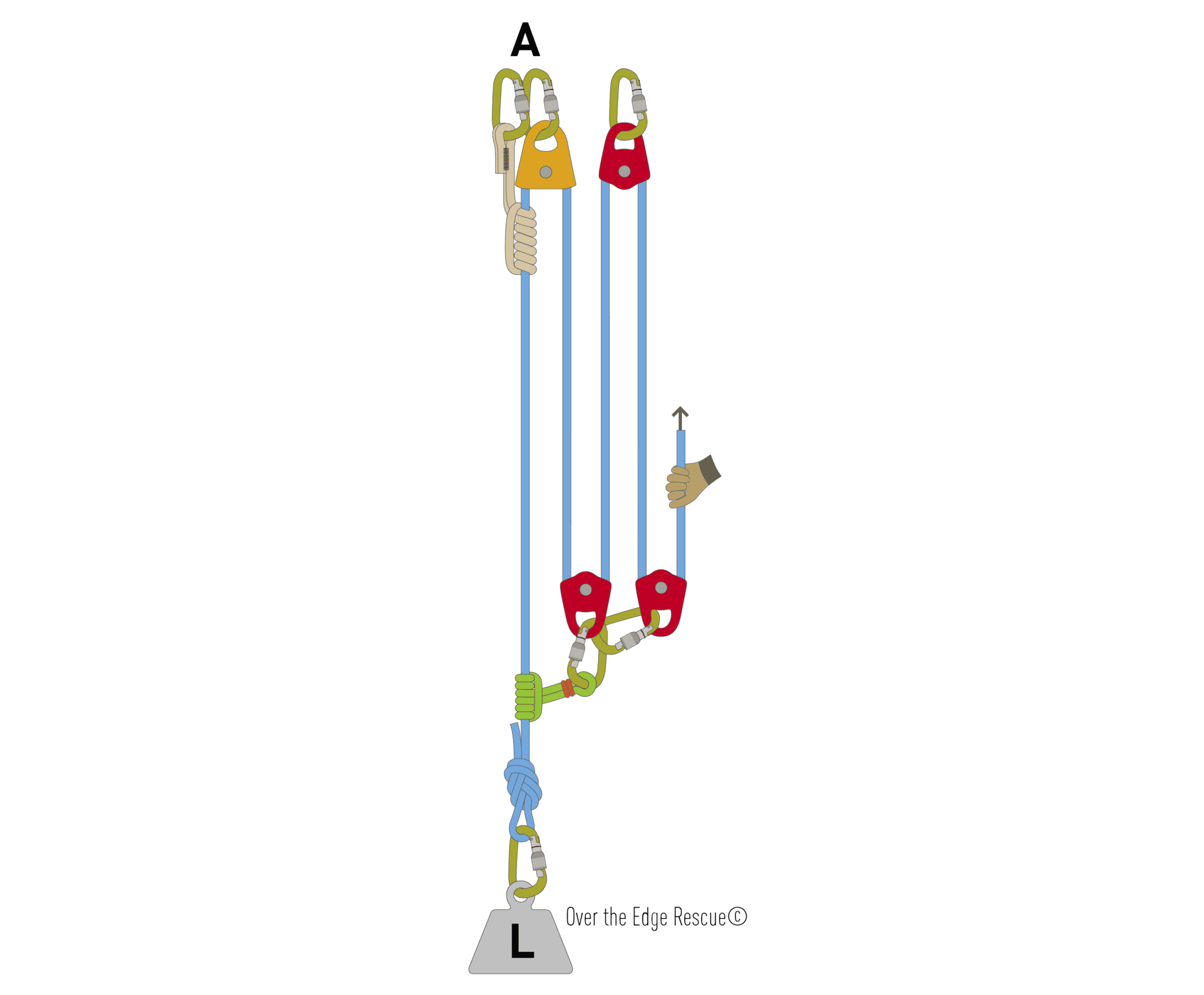
A compound system is ‘one (or more) simple system pulling on another simple pulley system’.
- For example, the figure below shows a 3:1 simple system pulling on a 2:1 simple pulley system, resulting in a compound 6:1 pulley system.
- A compound pulley system is notated with the lowercase letter (c) after the mechanical advantage of the system. For example, the figure on the right is notated 6:1c (3:1)(2:1). Note: the first simple pulley system is notated from the hauler end (or perspective), with subsequent simple pulley systems notated after this.
- A feature of compound systems over simple systems is that they provide greater mechanical advantage for the same number of pulleys and, therefore, are more efficient with less equipment.
Complex (cx)
A pulley system that is not simple or compound is complex, meaning that it is a complex system if it does not meet the rules of being simple or compound.
- This category of a pulley system is notated with the lowercase letter cx, with the appropriate mechanical advantage and a name where one exists.
- Complex pulley systems can be helpful in specific situations or as part of a pulley progression.
Mechanical Advantage (MA)
MA is the factor by which a pulley system multiplies the input force. The MA is expressed as a ratio, for example, 3:1. MA enables rescuers to do work while using less force.
Simple MA
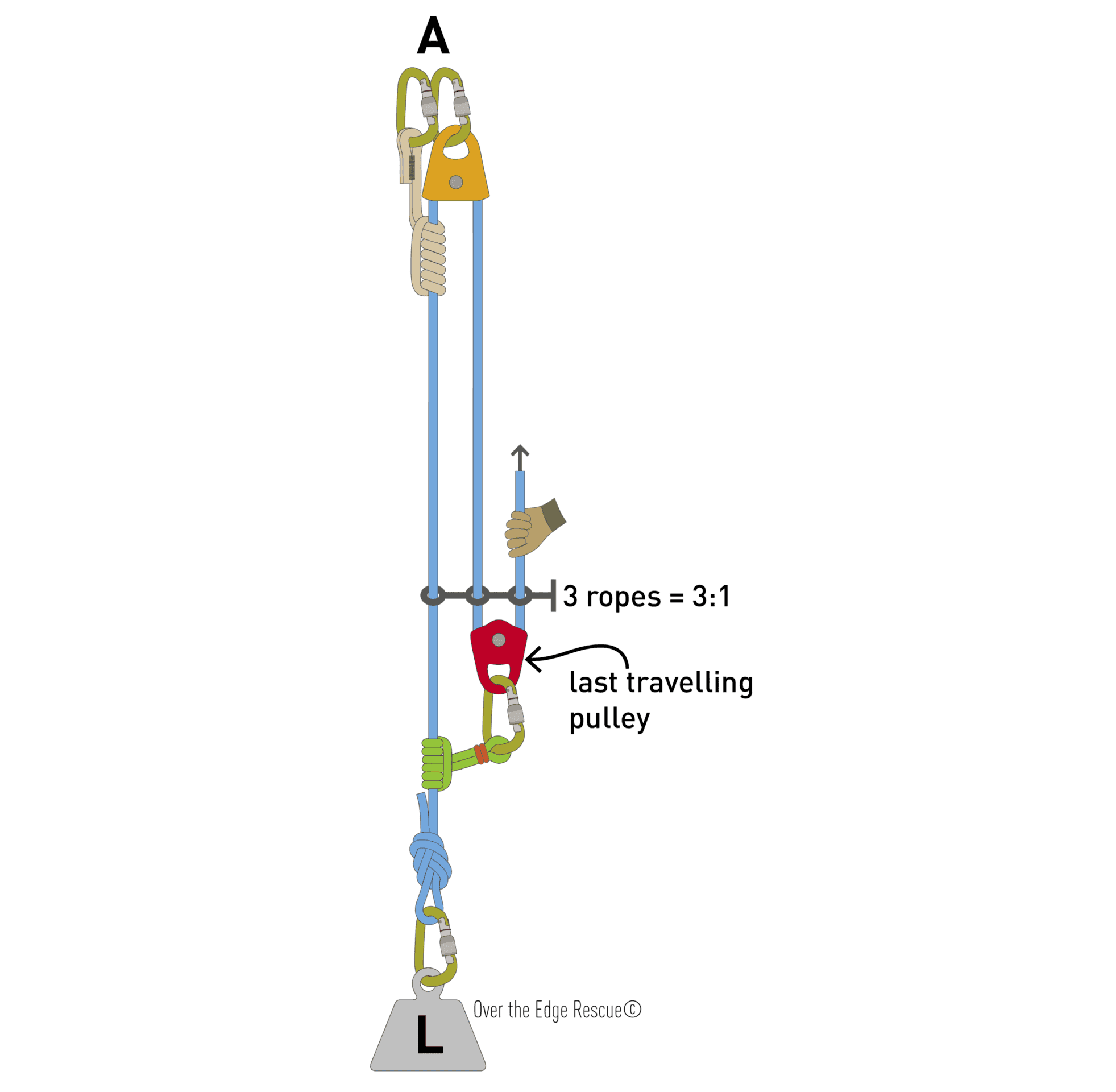
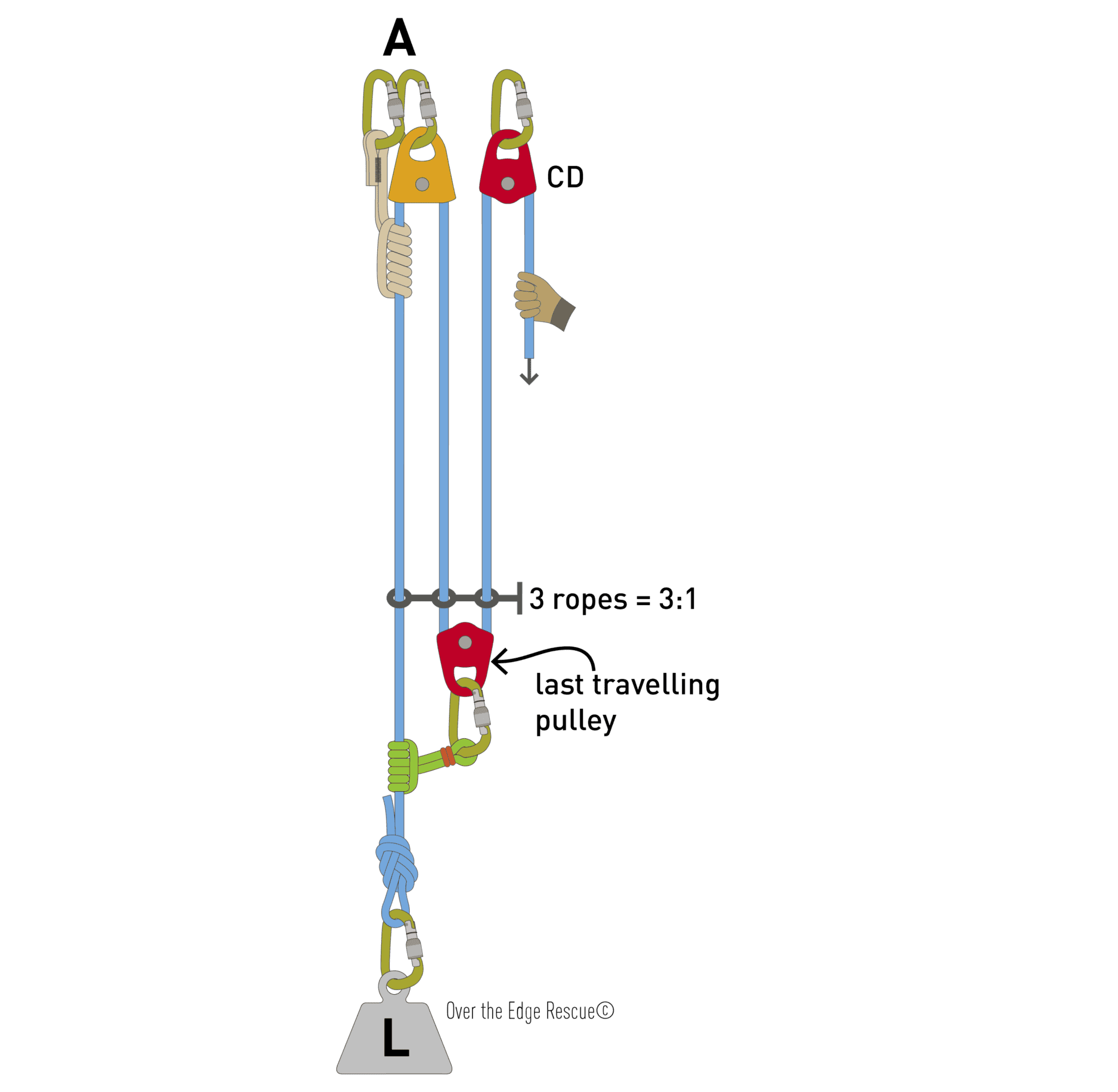
Counting the number of ropes holding up the load can determine a simple pulley system’s mechanical advantage (MA).
Find the rope exiting the last travelling pulley (closest to the hauler) and count all the ropes involved in the pulley system.
Change of direction (CD)
A change of direction occurs when the rope makes a U-turn around the last pulley attached to the anchor. It can be notated with capital letters (CD).
A change of direction is often put in place for convenience and efficiency, such as:
- Pulling downhill
- Pulling at 90 degrees to the top of a cliff to find a better place to haul
- Pulling away from an object to get maximum collapse of the pulley system (chockablock)
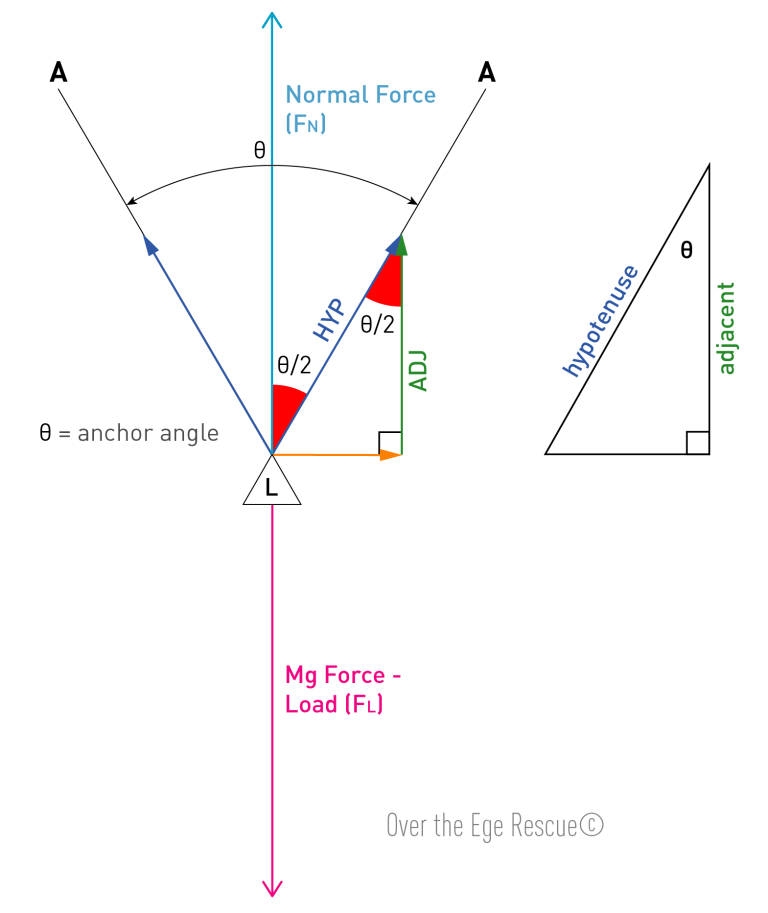
Be aware the change of direction adds load on the anchor, and additional friction in the system.
When calculating the MA of a pulley system, the change of direction adds no mechanical advantage.
Pulley Progression
Progressions are a great way to think and train in pulley systems. How do you get more mechanical advantage with fewer moves?
Start at the smallest MA to get the job done efficiently. Be prepared for the next progression (more MA) should you need it.
Get this post as a 10-page PDF download
Put your first name and email address below, and I’ll email you a link.
For more detailed information:
Rope Rescue & Rigging Field Guide
for Cave, Canyon, Alpine and Rock
A waterproof, A6 field guide covering knots, anchors, lowering, pulleys, changeovers, and stretcher rigging for backcountry rope rescue — built for teams who carry their gear on foot.